Friday Night Funkin'
4,7MuziekBijgewerkt op 7 oktober 2026

Schermafbeeldingen

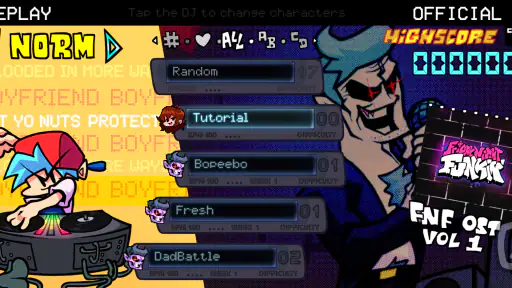
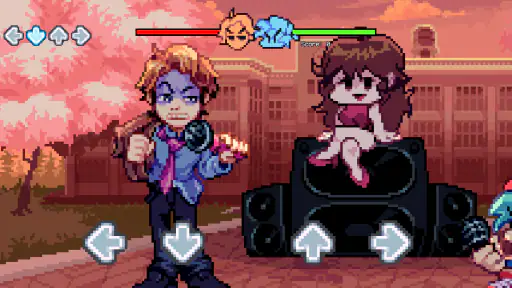
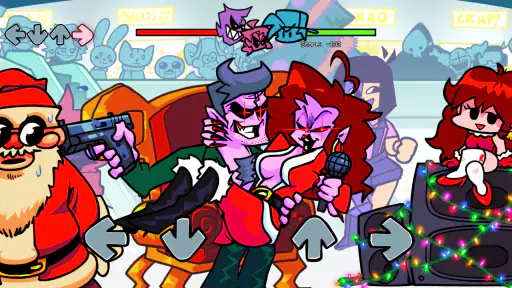
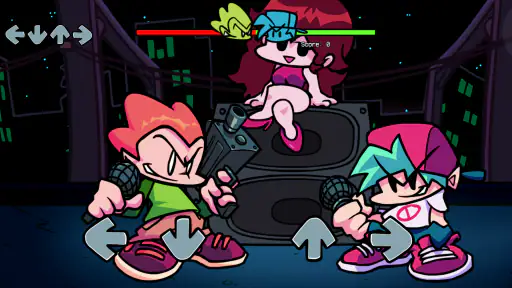
Voordelen
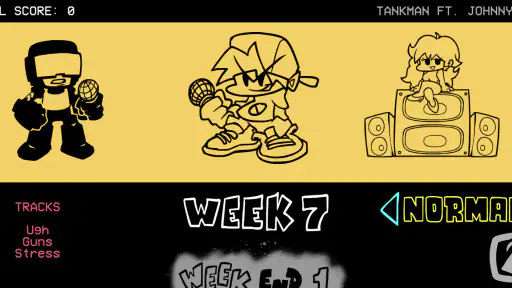
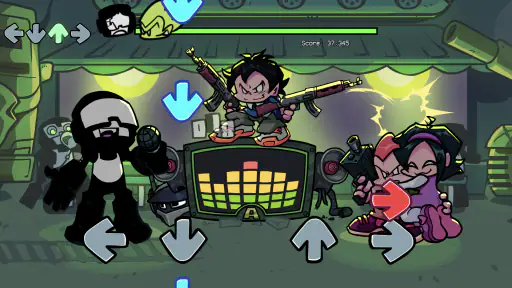
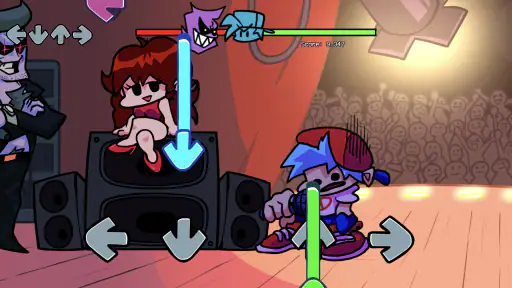
- Eenvoudige bediening met pijltjestoetsen maakt de basis snel toegankelijk.
- Korte nummers zijn geschikt voor snelle speelsessies.
- De herkenbare tekenstijl geeft het spel een eigen uitstraling.
- Nieuwe personages en nummers zorgen voor afwisseling.
- De open-sourcebasis stimuleert fanprojecten en aangepaste content.
Nadelen
- Hogere moeilijkheidsgraden vragen om snelle reacties en veel oefening.
- De bediening kan op een touchscreen minder nauwkeurig aanvoelen.
- De beschikbaarheid en kwaliteit van mobiele versies kunnen per aanbieder verschillen.
- Sommige fanversies bevatten advertenties of extra downloads.
- De onofficiële uitbreidingen kunnen sterk wisselen in stabiliteit en kwaliteit.
 Analyse door Mobexer
Friday Night Funkin’ is a rhythm game with a wonderfully direct appeal: listen, watch the notes, and tap along to the beat. My first impression is that it is less about quietly filling a spare minute and more about getting drawn into a musical challenge. The bold, cartoonish presentation and punchy songs give each attempt a strong sense of personality, while the simple premise makes it easy to understand why the game has attracted such a large audience.
The important distinction for a newcomer is that understanding the idea is easier than mastering the timing. A first run can feel lively and approachable, but keeping up when the rhythm becomes less forgiving takes attention and practice. I would recommend Friday Night Funkin’ to anyone who enjoys music games and is happy to learn through repetition, rather than to someone expecting a passive playlist or a relaxing background activity.
What you can expect from the rhythm challenges
At its heart, this is a game about matching your inputs to musical cues. That makes every successful sequence feel earned: you are not simply hearing a track, but actively responding to it. I find that satisfying because even a short play session gives me a clear goal. Follow the rhythm more accurately than before, and the next attempt feels more controlled.
The game belongs to the music genre, but it does not feel like a conventional music player with a game layered on top. The songs and the act of playing are closely connected. You need to pay attention to what is happening on screen as well as to the beat, so it rewards focused listening and quick reactions. If you like rhythm games where your hands have to keep pace with what your ears pick up, that is the central attraction here.
The energetic art style helps give the experience a distinct identity. It is expressive rather than realistic, and that suits the slightly mischievous tone. I would not choose it for subdued visuals or a meditative mood; its appeal is the combination of music, animation, and challenge. For younger players, note that the age guidance is PEGI 12, so it is worth considering that rating before handing the game over.
There is a learning curve, and that is not a flaw for everyone. Beginners may initially focus so hard on the visual prompts that the music becomes secondary. With practice, I find it more useful to listen for the rhythm and let the screen guide my timing, rather than trying to react to every cue as a separate surprise. That shift is a practical way to make a difficult section feel less chaotic.
Starting without overthinking the controls
When you first open the game, give yourself a moment to understand the play screen before trying to chase a perfect run. The useful first goal is simply to complete a section while noticing how the cues line up with the music. A messy attempt still teaches you where your attention slips: perhaps you react late, lose the beat after a quick sequence, or stare at the screen instead of listening.
Laatste nieuws
Bijbel + Audio na een systeemupdate: vertrouwen zit in blijven luisteren

Waarom Facebook Lite De Verassende Held Van Sociale Media Is

KineMaster: De Smartphone Studio die Videobewerking Hervormt

Waarom Whiteout Survival Je Blijft Boeien

Microsoft Excel: De Onmisbare Reus in Mobiele Productiviteit

Waarom Weer & Radar met buienradar Uitblinkt Onder Weer-Apps
I suggest beginning with a comfortable playing position and keeping your hands relaxed. Rhythm games punish tension because a tight grip makes quick, consistent taps harder. If you are playing on a phone, settle it securely before starting rather than trying to adjust your hold mid-song. That small bit of preparation can make the early attempts feel much less awkward.
For a first session, resist the urge to treat every miss as a reason to restart immediately. Play through enough to learn the shape of the rhythm, then try again with one specific improvement in mind. For example, decide to focus on keeping a steady pace through a section that made you stumble. This is more useful than trying to fix timing, hand position, and visual tracking all at once.
Your first meaningful win
A good first success is not necessarily a flawless performance. I count it as progress when I finish a section with better control than on the previous try, or when a sequence that seemed confusing starts to feel predictable. That gives you a concrete milestone without turning the opening session into a test you are expected to ace.
One helpful technique is to notice recurring rhythmic patterns rather than treating every cue as brand-new information. If a passage has a repeated feel, recognizing that repetition can free up attention for the moments that change. This is especially useful when a song speeds up or adds a denser run of inputs. You are not memorizing everything at once; you are learning which parts you can anticipate and which parts still need close attention.
Another practical tip is to stop briefly after a frustrating run. Playing again immediately while annoyed often makes me tap harder and listen less carefully. A short pause resets my focus, and then I can return with a single question: which moment threw me off? That kind of deliberate retry is more rewarding than repeating the whole song on autopilot.
Where new players can get confused
The most common early confusion is assuming that the visual cues alone are enough. They help, but rhythm is the point: if you only chase what appears on screen, rapid passages can feel like a blur. I get better results by letting the music establish the pulse and using the prompts to confirm what I hear. This takes a little time, especially if you are new to rhythm games, but it makes the play feel more musical and less like frantic button-pressing.
It is also easy to mistake difficulty for poor responsiveness. Before concluding that you cannot keep up, check whether you are starting each input too late or trying to press in a tense, uneven rhythm. A few controlled attempts can reveal the difference. If a particular sequence consistently catches you out, focus on that passage rather than judging your whole ability by one rough run.
Phone play has its own trade-off: the screen is close and convenient, but your hands can cover part of what you want to see or make tapping feel cramped. Try a different grip or a more stable resting position before deciding that the game is not for you. If the device is uncomfortable to hold for a song, the problem may be the setup rather than the challenge itself.
There is another expectation worth adjusting: this is not the best choice when you want music to play while your attention is elsewhere. The fun comes from responding, so interruptions make it harder to stay in rhythm. I would save it for a short break when you can focus, rather than trying to play while walking, multitasking, or having a conversation that needs your attention.
How it compares with other music games
Compared with a straightforward tap-along game, Friday Night Funkin’ makes its musical performance and visual character part of the same experience. That gives it more personality than a bare sequence of notes, but it also asks you to engage with more than the soundtrack. If your main priority is a simple, low-pressure way to tap to familiar music, another rhythm game with a calmer presentation may suit you better.
On the other hand, players who like learning a song through repeated attempts may find this a better fit than games that feel like a quick reflex test with little sense of character. Here, the music is not merely a timer for your taps; it is the reason to improve. I would choose it when I want a compact challenge with a recognizable style, and choose a music app or a less demanding game when I only want sound in the background.
Its strongest appeal is therefore quite specific: it is for someone who enjoys the feeling of getting better at a rhythm, not necessarily for every person who likes music. If you are unsure, give the opening a fair try and pay attention to whether the process of repeating a passage feels satisfying. If every retry feels like a chore, the genre may not be right for you, and there is no need to force it.
Who should install it, and who may prefer something else
I think it is a good match for players who enjoy rhythm challenges, animated presentation, and gradual improvement. It also works well for someone looking for a focused game to pick up during a break: a single attempt gives you something specific to work on, and you can stop once you have made progress. The game is free, so trying it does not require a purchase; it has more than ten million installs and an average rating of 4.7 from around 488,000 ratings.
The developer is The Funkin’ Crew Inc., and the game’s current version is 0.8.8. It was released on 10 July 2025 and requires Android 9 or later. Those details are useful to check against your device before installing, especially if you are using an older Android phone. The game is listed for Android, so iPhone users should not assume that this Android release is available on iOS.
I would steer away from it if you want a quiet, hands-free music experience, dislike repeating difficult sections, or need a game that stays easy without asking for timing practice. It may also be less comfortable if you find fast visual activity tiring. In those cases, a more relaxed music game—or simply listening to a playlist—will be a better match than trying to make this one fit your routine.
Turning a first session into a satisfying routine
A realistic way to play is to use a short break to work on one song or one tricky stretch, then leave it there. That keeps practice manageable and gives you a clear point to return to next time. I would avoid grinding while tired: rhythm depends on attention, and a run of careless misses can make a manageable challenge seem much harder than it is.
When you come back, start by listening for the pulse before tapping aggressively. If you already know which section gave you trouble, make that the focus of the session. This small workflow—listen, attempt, identify one mistake, retry—turns repetition into learning. It is also a good way to judge whether the game’s challenge is enjoyable for you instead of merely difficult.
For a first-time player, a useful everyday test is to install it before a quiet break rather than opening it while rushing between tasks. Give yourself enough attention to hear the beat, try a section, and decide whether the retry loop is enjoyable. If you have only a moment and expect to be interrupted, a song-based challenge may be a poor fit even when you like its style. A focused few minutes will tell you more than a distracted first impression.
One practical question is how to tell whether a rough start means you should keep practising. I would give the same passage a small number of thoughtful attempts, changing one thing at a time: first relax your hands, then listen for the pulse, then watch for the cues that break the pattern. If you can identify what went wrong, the difficulty is giving you something to learn. If every run feels equally random and irritating, it is reasonable to choose a calmer game instead.
Another trade-off is where to play. A stable seat and a phone position that leaves the screen visible are more useful than trying to play one-handed while carrying something or moving around. The game asks for coordinated attention, so comfort is not just a luxury; it affects how clearly you can see and respond. I would also avoid making a first judgment when tired, since missed timing can feel much more punishing when concentration is low.
Friday Night Funkin’ is at its best when I have a few uninterrupted minutes and want to feel myself improve. It has a recognizable style, a clear musical purpose, and enough challenge to make a good run feel earned. The trade-off is that new players may need patience, and the active, timing-focused play is not suited to every mood. If that sounds appealing, start slowly, listen as much as you watch, and count a cleaner attempt as a win. Friday Night Funkin’ is worth trying for rhythm-game fans who want character and practice, but it is better skipped if you are looking for effortless background entertainment.
Veelgestelde vragen
Wat is Friday Night Funkin’ en wat doe je in het spel?
Friday Night Funkin’ is een ritmegame waarin je muziekduels speelt door op de juiste momenten de pijltjestoetsen of knoppen in te drukken. Je speelt als de Boyfriend, die indruk wil maken op de Girlfriend en daarvoor verschillende tegenstanders moet verslaan in muzikale confrontaties. De nadruk ligt op timing, ritme en het herkennen van patronen. De kleurrijke tekenstijl en energieke soundtrack geven het spel een herkenbare, speelse uitstraling.
Is Friday Night Funkin’ gratis te downloaden op Android en iOS?
De oorspronkelijke versie van Friday Night Funkin’ is vooral bekend als gratis spel voor webbrowsers en pc. Of er een officiële versie voor Android of iOS beschikbaar is, hangt af van de actuele aanbiedingen in de Google Play Store en Apple App Store. Controleer daarom vóór het downloaden de uitgever, beoordelingen en appgegevens. Niet-officiële mobiele versies kunnen advertenties, betaalde functies of andere aanpassingen bevatten en zijn niet noodzakelijk hetzelfde als het oorspronkelijke spel.
Heb je een internetverbinding nodig om Friday Night Funkin’ te spelen?
Dat hangt af van de versie die je gebruikt. De browseruitvoering heeft doorgaans een internetverbinding nodig om het spel te laden, terwijl sommige mobiele of aangepaste versies mogelijk offline speelbaar zijn nadat ze zijn geïnstalleerd. Controleer de productinformatie van de specifieke app, want offline beschikbaarheid is niet voor iedere uitgave gegarandeerd. Houd er ook rekening mee dat updates, extra content of online functies alsnog een verbinding kunnen vereisen.
Is Friday Night Funkin’ geschikt voor kinderen?
Friday Night Funkin’ heeft een cartooneske presentatie en eenvoudige basisbediening, maar ouders doen er goed aan de inhoud van de specifieke versie eerst te controleren. De personages en dialogen kunnen verwijzingen bevatten naar thema’s of humor die niet voor ieder kind geschikt zijn. Ook kunnen mobiele versies advertenties, aankopen of functies van derden bevatten. Bekijk de leeftijdsclassificatie en appmachtigingen in de officiële winkel en bespreek eventueel vooraf wat je kind in het spel kan tegenkomen.
Wat moet ik weten over de moeilijkheidsgraad en bediening?
De bediening van Friday Night Funkin’ is eenvoudig te begrijpen: je drukt op de overeenkomstige richting wanneer de bewegende pijlen de doelmarkeringen bereiken. De uitdaging neemt toe doordat nummers sneller kunnen worden en langere of ingewikkeldere patronen bevatten. Beginners kunnen daardoor wat oefening nodig hebben om het ritme en de timing onder de knie te krijgen. Op een touchscreen kan de ervaring bovendien verschillen van spelen met een toetsenbord, afhankelijk van hoe de betreffende mobiele versie is ontworpen.